and runs during HTML parse, but hubspotutk is set by js.hs-analytics.net, measured loading at ~834ms. On a first visit the cookie does not exist yet, so a single read returns nothing and the visitor gets no external ID at all — and a first visit is exactly what an ad click is. So poll briefly until HubSpot sets it. The SDK loads lazily (~4.5s) and replays a queue, so an init queued a second or two in still lands before any events are transmitted. */ (function attachExternalId() { var attempts = 0; var MAX_ATTEMPTS = 40; /* 40 x 200ms = 8s, then give up quietly */ var timer = null; function tryAttach() { var raw = getExternalId(); if (!raw) { if (++attempts >= MAX_ATTEMPTS && timer) clearInterval(timer); return; } if (timer) clearInterval(timer); sha256Hex(raw).then(function (hash) { oaiq("init", { user: { external_id_sha256: hash } }); }).catch(function () {}); } tryAttach(); /* returning visitor: immediate */ if (!getExternalId()) timer = setInterval(tryAttach, 200); })(); /* --------------------------------------------------------------------------- 2. Load the SDK off the critical path Whichever comes first: the main thread going idle after load, or the first sign of real user intent. No preconnect on purpose — a TLS handshake during LCP for a script we deliberately deferred is a net loss. Measured on clickpost.ai: load event 3614ms, SDK fetched 4508ms. ------------------------------------------------------------------------ */ var loaded = false; var INTENT = ["pointerdown", "keydown", "scroll"]; function loadSdk() { if (loaded) return; loaded = true; INTENT.forEach(function (t) { removeEventListener(t, loadSdk, { passive: true }); }); var s = document.createElement("script"); s.src = SDK; s.async = true; s.fetchPriority = "low"; document.head.appendChild(s); } INTENT.forEach(function (t) { addEventListener(t, loadSdk, { passive: true, once: true }); }); addEventListener("load", function () { window.requestIdleCallback ? requestIdleCallback(loadSdk, { timeout: 2500 }) : setTimeout(loadSdk, 1500); }, { once: true }); /* --------------------------------------------------------------------------- 3. Conversion id sha256(lowercase(email) + "|" + formId + "|" + ISO-hour), first 20 hex, "lead_" prefix. - email lowercased/trimmed so casing does not fork the id - formId keeps two different forms in the same hour from colliding - the hour bucket is only the server's fallback; the id computed here is sent to the relay verbatim, so the two paths cannot disagree even when a submit straddles an hour boundary Ads Manager's own sample omits event_id. We send it so the pixel event and the relay event collapse into one conversion instead of counting twice. ------------------------------------------------------------------------ */ function buildEventId(email, formId) { var seed = [ String(email || "").trim().toLowerCase(), String(formId || ""), new Date().toISOString().slice(0, 13) ].join("|"); return crypto.subtle.digest("SHA-256", new TextEncoder().encode(seed)).then(function (buf) { var hex = Array.prototype.map.call(new Uint8Array(buf), function (b) { return b.toString(16).padStart(2, "0"); }).join(""); return "lead_" + hex.slice(0, 20); }); } /* Guards a re-fire from the history.pushState that book-a-demo-core.js runs after submit, and from back-navigation onto the same state. */ function firedOnce(id) { try { if (sessionStorage.getItem("oaiq_" + id)) return true; sessionStorage.setItem("oaiq_" + id, "1"); return false; } catch (e) { return false; /* private mode / blocked storage: fire rather than lose it */ } } /* Path 2. keepalive lets the request finish even if the page navigates away. Failures are swallowed deliberately: a reporting call must never surface an error to someone who just submitted a form. The relay hashes the email server-side into user.emails_sha256 and adds the caller's IP and user agent, so this event carries the same match signals the pixel gets for free. */ function sendToRelay(email, formId, eventType, eventId) { try { var payload = { token: RELAY_TOKEN, email: email, form_id: formId || "", event_type: eventType, event_id: eventId, /* verbatim, so both paths always match */ source_url: location.href }; var oppref = getOppref(); if (oppref) payload.oppref = oppref; var externalId = getExternalId(); if (externalId) payload.external_id = externalId; fetch(RELAY_URL, { method: "POST", keepalive: true, headers: { "Content-Type": "application/json" }, body: JSON.stringify(payload) }).catch(function () {}); } catch (e) {} } /* Capture the email while the form is still on the page. onFormSubmitted does not reliably carry submissionValues, and by then the form may be removed. */ var lastEmail = ""; document.addEventListener("submit", function (e) { var f = e.target; if (!f || !f.querySelector) return; var i = f.querySelector('input[name="email"], input[type="email"]'); if (i && i.value) lastEmail = i.value; }, true); /* Every HubSpot form on the site reports through this one message event, so no module or theme JS needs editing to add coverage. */ window.addEventListener("message", function (e) { var d = e.data; if (!d || d.type !== "hsFormCallback" || d.eventName !== "onFormSubmitted") return; var email = (d.data && d.data.submissionValues && d.data.submissionValues.email) || lastEmail; if (!email) return; /* without an email there is no stable id to dedupe on */ var eventType = EVENT_BY_FORM[d.id] || EVENT_DEFAULT; buildEventId(email, d.id).then(function (id) { if (firedOnce(id)) return; oaiq("measure", eventType, { type: DATA_TYPE }, { event_id: id }); /* path 1 */ sendToRelay(email, d.id, eventType, id); /* path 2 */ }); }); })();

91ÊÓƵ

See where your logistics stands on automation Start assessment

SMSA Express Tracking and API Integration with ClickPost

Bring order processing times down by 60% with the help of carrier allocation and label generation automation!

Courier-SMSA-Express

Trusted by 600+ global brands

puma
decathlon-logo
nykaa-logo
herbalife-logo
lenskart-logo
dogtra-logo
the-body-shop-logo
Birkenstock-logo
New-Me-logo
palome
Tata-1mg-logo
Adidas-logo
Jackery-logo
Oriflame-logo
Giva-logo
mars-logo
Sotheby-logo
ABFRL-logo
SMSA-Express-clickpost

Benefits of Connecting with SMSA Express through ClickPost

Leverage SMSA Express’s dependable delivery network, enhanced by ClickPost’s logistics intelligence for faster, smarter fulfillment.

  • Give your staff 100% visibility of all orders and their statuses, both in-house and across retailers 
  • Reduce errors related to manual efforts by 60% across the board using end-to-end order processing automation. 
  • Minimize delivery delays by at least 21% with the help of SLA breach and delay detection for all shipments. 

Check the integration library

Partner ID Order Creation Cancellation Tracking via Polling Tracking via Webhook Proof of Delivery (POD) Non Delivery Report (NDR) Create Pickup Request AWB Generation Flow Label Generation Country
image 2 (3)
SMSA
79 ✓ -- ✓ -- -- -- -- -- ✓

How to Track SMSA Express Packages

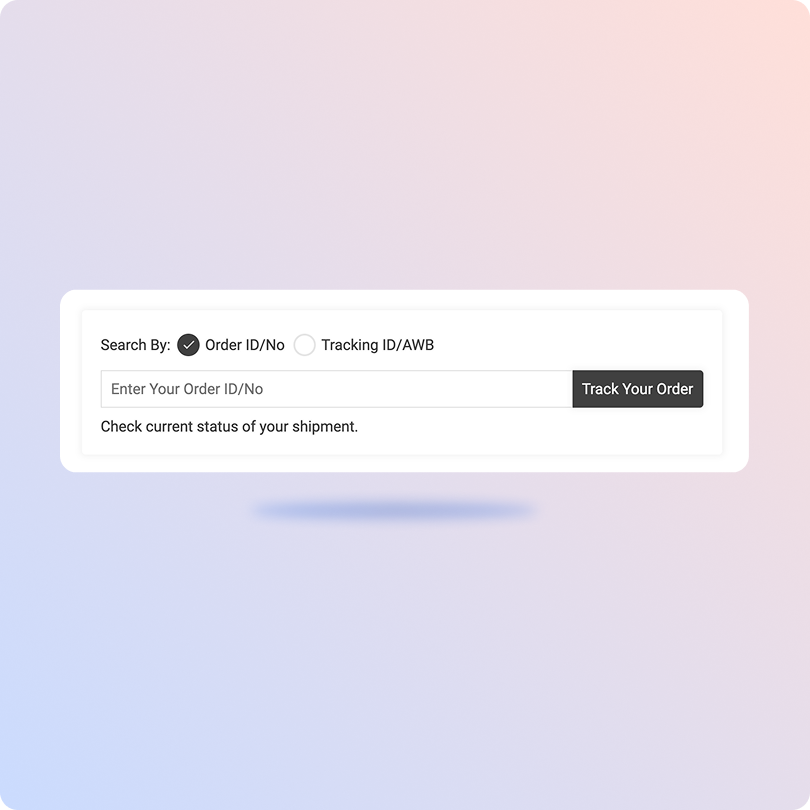
How to Track SMSA Express Packages with ClickPost Tracking Page

How to Track SMSA Express Packages with ClickPost Tracking Page 

  • Note down your SMSA Express tracking number(s).
  • Access ClickPost’s branded tracking dashboard
  • Input the tracking number (or numbers) of the respective shipment(s).
  • Click “Track” to see real-time updates.
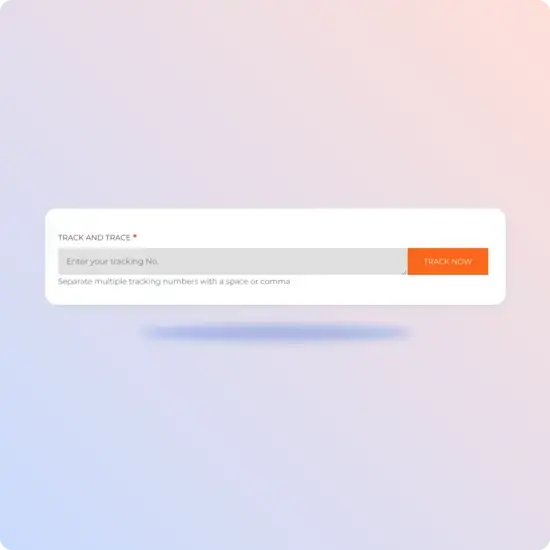
How to Track SMSA Express Packages with the Official Tracking Page

  • Head to the Track and Trace Page on the SMSA Express official website
  • Enter the respective tracking number. You can enter multiple tracking ID’s separated by commas or spaces. 
  •  Click on “Track Now” to process the tracking numbers 
  • Wait for the shipment statuses to load.

List of SMSA Express APIs

API Description
Manifestation and Label Generation API Seamlessly manifest orders and auto-generate shipping labels with SMSA Express in real-time.
Track Shipment API Stay updated on shipment statuses in real-time via the carrier network.
Cancellation API Cancel shipments instantly through the API—no manual intervention required.
EDD API Provide customers with precise delivery date estimates based on SMSA Express’s data.
NDR Action Update Respond quickly to delivery failures and reduce RTOs with automated NDR actions.
Return Webhooks Trigger and manage return requests effortlessly with carrier integrated webhooks.
API & Description
Manifestation and Label Generation API
Seamlessly manifest orders and auto-generate shipping labels with SMSA Express in real-time.
Track Shipment API
Stay updated on shipment statuses in real-time via the carrier network.
Cancellation API
Cancel shipments instantly through the API—no manual intervention required.
EDD API
Provide customers with precise delivery date estimates based on SMSA Express’s data.
NDR Action Update
Respond quickly to delivery failures and reduce RTOs with automated NDR actions.
Return Webhooks
Trigger and manage return requests effortlessly with carrier integrated webhooks.

Frequently asked questions

How does the SMSA Express API work when integrated with ClickPost?

ClickPost integrates with SMSA Express via REST APIs to automate shipment creation, label generation, and tracking updates. Once an order is created, SMSA returns the AWB and label, while ClickPost periodically pulls tracking and NDR statuses. All tracking updates are mapped to a unified tracking dashboard for centralized visibility and exception handling.

Is it possible to upload orders in bulk for SMSA through ClickPost?

Yes, you can upload orders in bulk for SMSA Express through ClickPost. Whether using a simple CSV file or API, multiple shipments can be processed at once. Labels and tracking details are generated automatically, making the process faster and easier to manage.

Will I get live tracking updates for SMSA deliveries using ClickPost’s dashboard?

Yes, ClickPost provides live tracking updates for all SMSA Express shipments. As the order moves through different delivery stages, real-time status updates are pulled from SMSA and displayed on your ClickPost dashboard, using standardized statuses and sub-statuses. This helps you monitor deliveries and resolve issues faster.

What delivery services from SMSA Express can I use through ClickPost?

ClickPost supports a wide range of SMSA Express services, including domestic, international, express delivery, and reverse logistics. You can also manage specialized shipments like temperature-sensitive or hazardous goods, which makes it especially useful for the healthcare industries. All deliveries are monitored via real-time tracking and customer notifications.

What is SMSA API?

Founded in 1994 by Mr. Sultan Mohammed Saleh Al Athel, SMSA Express quickly established itself as a trusted logistics partner in the Kingdom of Saudi Arabia (KSA). With a long-term goal in mind of expanding their reach across the globe, this carrier began its journey by first expanding its services and resources. This carrier has 11 active offices functioning across 230+ countries world over. Within the KSA region, it operates 400+ retail facilities. Over the past 3 decades, it has received numerous quality accreditations, including multiple ISO certifications. It also has the requisite license for handling specified dangerous/hazmat goods. From the time of its inception, SMSA Express offered road and rail freight services across 325 cities in Saudi Arabia, moving quickly to air and sea freight. Alongside cross-border domestic and international delivery services, customs clearance, mailroom management, and freight forwarding solutions are also made available. SMSA Express is also well-known globally for offering industry-specific logistics solutions, tailor-made to suit a variety of requirements, such as special delivery channels for healthcare. It furnishes the usual pickup and delivery services, as well as inbound and outbound services for B2B ventures, and a diverse range of express delivery services for all ecommerce needs.

Streamline your shipping experience with ClickPost

image (3)-3
. window.disableHubSpotCookieBanner = true; function killNative() { var n = document.getElementById("hs-eu-cookie-confirmation"); if (n && n.parentNode) { n.parentNode.removeChild(n); return true; } return false; } killNative(); if (window.MutationObserver) { var mo = new MutationObserver(function () { killNative(); }); mo.observe(document.documentElement, { childList: true, subtree: true }); setTimeout(function () { mo.disconnect(); }, 15000); } var COOKIE = "cp_cookie_consent"; var EU = ["at","be","bg","hr","cy","cz","dk","ee","fi","fr","de","gr","hu","ie","it","lv","lt","lu","mt","nl","pl","pt","ro","sk","si","es","se","gb","uk","is","li","no","ch"]; function readCookie(nm) { var m = document.cookie.match(new RegExp("(?:^|; )" + nm + "=([^;]*)")); return m ? decodeURIComponent(m[1]) : null; } function writeCookie(nm, val, days) { var d = new Date(); d.setTime(d.getTime() + (days * 864e5)); document.cookie = nm + "=" + encodeURIComponent(val) + ";expires=" + d.toUTCString() + ";path=/;SameSite=Lax" + (location.protocol === "https:" ? ";Secure" : ""); } function stored() { var raw = readCookie(COOKIE); if (!raw) return null; try { var o = JSON.parse(raw); if (typeof o.analytics === "boolean") return o; } catch (e) {} return null; } function apply(state, revoke) { window._hsp = window._hsp || []; window._hsp.push(["setHubSpotConsent", { analytics: !!state.analytics, advertisement: !!state.advertisement, functionality: !!state.functionality }]); if (revoke && !state.analytics && !state.advertisement && !state.functionality) { window._hsp.push(["revokeCookieConsent"]); } window.dataLayer = window.dataLayer || []; window.dataLayer.push({ event: "cp_cookie_consent", cp_consent_analytics: !!state.analytics, cp_consent_advertisement: !!state.advertisement, cp_consent_functionality: !!state.functionality }); document.documentElement.setAttribute("data-cp-consent", "set"); } function inScope(banner) { if (banner.getAttribute("data-scope") !== "eu_only") return true; var geo = (document.body.getAttribute("data-geo_location") || "").toLowerCase(); if (!geo) return true; return EU.indexOf(geo) !== -1; } function init(banner) { var days = parseInt(banner.getAttribute("data-days"), 10) || 180; var prefs = banner.querySelector("[data-cpcb-prefs]"); var compact = banner.querySelector('[data-cpcb-actions="compact"]'); var expanded = banner.querySelector('[data-cpcb-actions="expanded"]'); var toggles = banner.querySelectorAll("[data-cpcb-toggle]"); function show() { banner.hidden = false; requestAnimationFrame(function () { banner.classList.add("is-visible"); }); } function hide() { banner.classList.remove("is-visible"); setTimeout(function () { banner.hidden = true; }, 300); } function collapse() { if (!prefs) return; prefs.hidden = true; if (expanded) expanded.hidden = true; if (compact) compact.hidden = false; } function expand() { if (!prefs) return; prefs.hidden = false; if (compact) compact.hidden = true; if (expanded) expanded.hidden = false; } function paint(state) { Array.prototype.forEach.call(toggles, function (t) { var key = t.getAttribute("data-cpcb-toggle"); if (key === "necessary") { t.setAttribute("aria-checked", "true"); return; } t.setAttribute("aria-checked", state[key] ? "true" : "false"); }); } function fromToggles() { var state = { analytics: false, advertisement: false, functionality: false }; Array.prototype.forEach.call(toggles, function (t) { var key = t.getAttribute("data-cpcb-toggle"); if (key in state) state[key] = t.getAttribute("aria-checked") === "true"; }); return state; } function commit(state, revoke) { writeCookie(COOKIE, JSON.stringify({ analytics: !!state.analytics, advertisement: !!state.advertisement, functionality: !!state.functionality, v: 1, ts: Date.now() }), days); apply(state, revoke); hide(); } Array.prototype.forEach.call(toggles, function (t) { if (t.disabled) return; t.addEventListener("click", function () { t.setAttribute("aria-checked", t.getAttribute("aria-checked") === "true" ? "false" : "true"); }); }); banner.addEventListener("click", function (e) { if (!e.target || !e.target.closest) return; var btn = e.target.closest("[data-cpcb-action]"); if (!btn) return; var action = btn.getAttribute("data-cpcb-action"); if (action === "customise") { expand(); return; } if (action === "accept") { commit({ analytics: true, advertisement: true, functionality: true }, false); return; } if (action === "reject") { commit({ analytics: false, advertisement: false, functionality: false }, true); return; } if (action === "save") { commit(fromToggles(), true); return; } }); var existing = stored(); if (existing) { apply(existing, false); paint(existing); collapse(); } else if (!inScope(banner)) { // Out of the consent-required region: implied consent, banner never shown. commitSilently(); } else { collapse(); show(); } function commitSilently() { var all = { analytics: true, advertisement: true, functionality: true }; writeCookie(COOKIE, JSON.stringify({ analytics: true, advertisement: true, functionality: true, v: 1, ts: Date.now(), implied: true }), days); apply(all, false); } // Public re-open hook for a footer "Cookie settings" link. window.cpCookieBanner = window.cpCookieBanner || {}; window.cpCookieBanner.open = function () { var s = stored() || { analytics: false, advertisement: false, functionality: false }; paint(s); expand(); show(); }; } function boot() { var banners = document.querySelectorAll("[data-cpcb]"); if (!banners.length) return; init(banners[0]); document.addEventListener("click", function (e) { if (!e.target || !e.target.closest) return; var trigger = e.target.closest("[data-cp-cookie-settings]"); if (!trigger) return; e.preventDefault(); if (window.cpCookieBanner && window.cpCookieBanner.open) window.cpCookieBanner.open(); }); } if (document.readyState === "loading") { document.addEventListener("DOMContentLoaded", boot); } else { boot(); } })();