and runs during HTML parse, but hubspotutk is set by js.hs-analytics.net, measured loading at ~834ms. On a first visit the cookie does not exist yet, so a single read returns nothing and the visitor gets no external ID at all — and a first visit is exactly what an ad click is. So poll briefly until HubSpot sets it. The SDK loads lazily (~4.5s) and replays a queue, so an init queued a second or two in still lands before any events are transmitted. */ (function attachExternalId() { var attempts = 0; var MAX_ATTEMPTS = 40; /* 40 x 200ms = 8s, then give up quietly */ var timer = null; function tryAttach() { var raw = getExternalId(); if (!raw) { if (++attempts >= MAX_ATTEMPTS && timer) clearInterval(timer); return; } if (timer) clearInterval(timer); sha256Hex(raw).then(function (hash) { oaiq("init", { user: { external_id_sha256: hash } }); }).catch(function () {}); } tryAttach(); /* returning visitor: immediate */ if (!getExternalId()) timer = setInterval(tryAttach, 200); })(); /* --------------------------------------------------------------------------- 2. Load the SDK off the critical path Whichever comes first: the main thread going idle after load, or the first sign of real user intent. No preconnect on purpose — a TLS handshake during LCP for a script we deliberately deferred is a net loss. Measured on clickpost.ai: load event 3614ms, SDK fetched 4508ms. ------------------------------------------------------------------------ */ var loaded = false; var INTENT = ["pointerdown", "keydown", "scroll"]; function loadSdk() { if (loaded) return; loaded = true; INTENT.forEach(function (t) { removeEventListener(t, loadSdk, { passive: true }); }); var s = document.createElement("script"); s.src = SDK; s.async = true; s.fetchPriority = "low"; document.head.appendChild(s); } INTENT.forEach(function (t) { addEventListener(t, loadSdk, { passive: true, once: true }); }); addEventListener("load", function () { window.requestIdleCallback ? requestIdleCallback(loadSdk, { timeout: 2500 }) : setTimeout(loadSdk, 1500); }, { once: true }); /* --------------------------------------------------------------------------- 3. Conversion id sha256(lowercase(email) + "|" + formId + "|" + ISO-hour), first 20 hex, "lead_" prefix. - email lowercased/trimmed so casing does not fork the id - formId keeps two different forms in the same hour from colliding - the hour bucket is only the server's fallback; the id computed here is sent to the relay verbatim, so the two paths cannot disagree even when a submit straddles an hour boundary Ads Manager's own sample omits event_id. We send it so the pixel event and the relay event collapse into one conversion instead of counting twice. ------------------------------------------------------------------------ */ function buildEventId(email, formId) { var seed = [ String(email || "").trim().toLowerCase(), String(formId || ""), new Date().toISOString().slice(0, 13) ].join("|"); return crypto.subtle.digest("SHA-256", new TextEncoder().encode(seed)).then(function (buf) { var hex = Array.prototype.map.call(new Uint8Array(buf), function (b) { return b.toString(16).padStart(2, "0"); }).join(""); return "lead_" + hex.slice(0, 20); }); } /* Guards a re-fire from the history.pushState that book-a-demo-core.js runs after submit, and from back-navigation onto the same state. */ function firedOnce(id) { try { if (sessionStorage.getItem("oaiq_" + id)) return true; sessionStorage.setItem("oaiq_" + id, "1"); return false; } catch (e) { return false; /* private mode / blocked storage: fire rather than lose it */ } } /* Path 2. keepalive lets the request finish even if the page navigates away. Failures are swallowed deliberately: a reporting call must never surface an error to someone who just submitted a form. The relay hashes the email server-side into user.emails_sha256 and adds the caller's IP and user agent, so this event carries the same match signals the pixel gets for free. */ function sendToRelay(email, formId, eventType, eventId) { try { var payload = { token: RELAY_TOKEN, email: email, form_id: formId || "", event_type: eventType, event_id: eventId, /* verbatim, so both paths always match */ source_url: location.href }; var oppref = getOppref(); if (oppref) payload.oppref = oppref; var externalId = getExternalId(); if (externalId) payload.external_id = externalId; fetch(RELAY_URL, { method: "POST", keepalive: true, headers: { "Content-Type": "application/json" }, body: JSON.stringify(payload) }).catch(function () {}); } catch (e) {} } /* Capture the email while the form is still on the page. onFormSubmitted does not reliably carry submissionValues, and by then the form may be removed. */ var lastEmail = ""; document.addEventListener("submit", function (e) { var f = e.target; if (!f || !f.querySelector) return; var i = f.querySelector('input[name="email"], input[type="email"]'); if (i && i.value) lastEmail = i.value; }, true); /* Every HubSpot form on the site reports through this one message event, so no module or theme JS needs editing to add coverage. */ window.addEventListener("message", function (e) { var d = e.data; if (!d || d.type !== "hsFormCallback" || d.eventName !== "onFormSubmitted") return; var email = (d.data && d.data.submissionValues && d.data.submissionValues.email) || lastEmail; if (!email) return; /* without an email there is no stable id to dedupe on */ var eventType = EVENT_BY_FORM[d.id] || EVENT_DEFAULT; buildEventId(email, d.id).then(function (id) { if (firedOnce(id)) return; oaiq("measure", eventType, { type: DATA_TYPE }, { event_id: id }); /* path 1 */ sendToRelay(email, d.id, eventType, id); /* path 2 */ }); }); })();

91ÊÓÆµ

See where your logistics stands on automation Start assessment

Home > Blog >

6 Types of Logistics Software: Features and Benefits Explained

6 Types of Logistics Software: Features and Benefits Explained

Teerna Mandal
By Teerna Mandal

Ready to ship smarter? Talk to our logistics experts.

Trusted by 600+ brands

In this blog

    Introduction

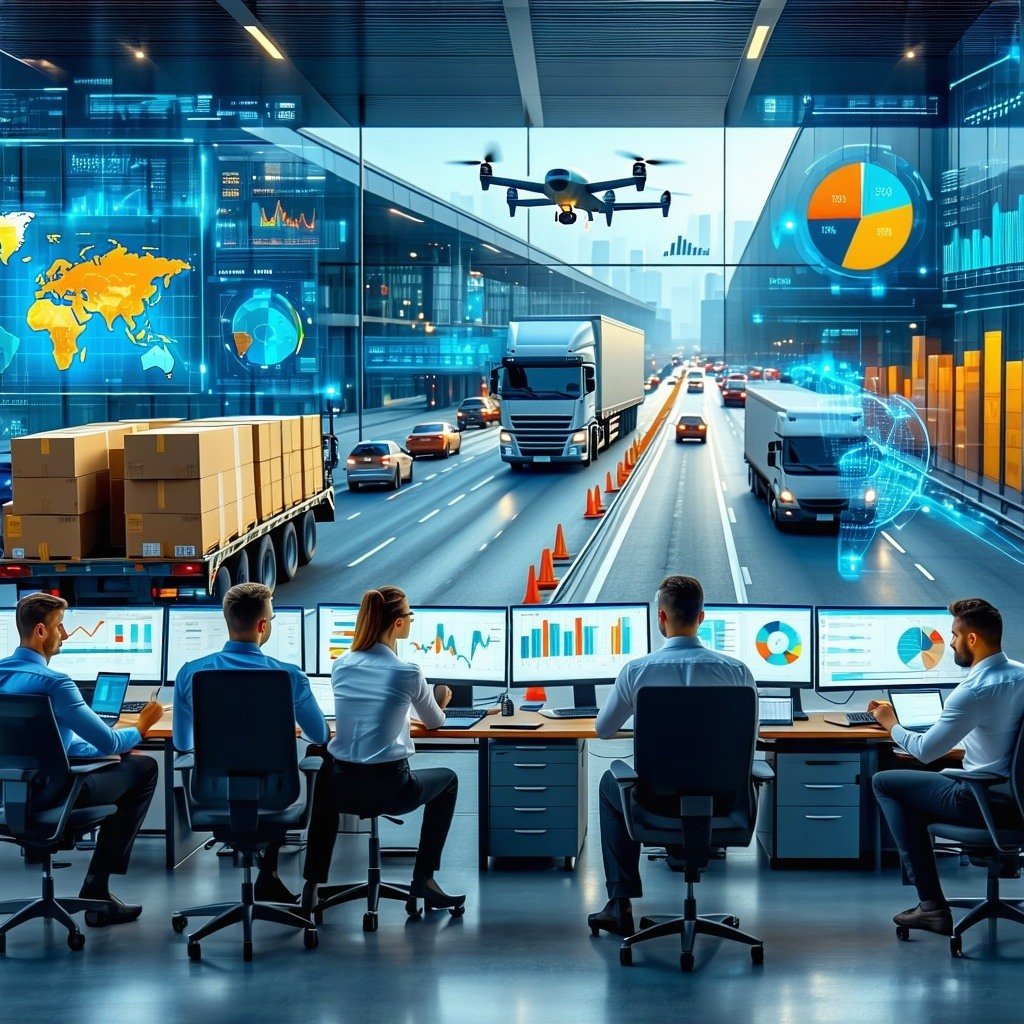
    Logistics software plays a pivotal role in forward and reverse logistics. Most businesses need the support of logistics companies to manage their entire supply chain operations. Logistics software streamline operations through automated systems that remove manual processes involved in creating, picking & packing, and delivering orders. It is meticulously designed to manage supply chains, address challenges from the ground up, and ensure the smooth movement of goods. A business that relies on capable software to handle large order volumes has a good chance of staying ahead of competitors. 

    It can simplify your shipping ops and ensure effective management of 3PLs with capabilities like multi-carrier tracking, real-time tracking, returns/exchange management, carrier allocation, and order visibility on a centralized dashboard. Logistics service providers and logistics companies rely on these software as much as brands do for enhancing core . Each software stands out for its unique offerings. 


    6 Different Types of Logistics Softwares

    By leveraging various individual logistics management processes, brands can control entire logistics operations. They replace human efficiency and improve your shipping operations, leading to better customer satisfaction. Here goes the list -

    Different Types of Logistics Software

    1. Demand Forecasting Software

    Demand forecasting software is an essential tool that gauges future customer demand for business outputs. It analyzes market trends, historical data, and advanced algorithms to offer accurate results for brands to make demand forecasts and predictions. The software allows enterprises to manage inventory and understand stockouts and overstock situations.

    A few prominent names in demand planning are SAP Integrated Business Planning software, GMDH Streamline software, Blue Ridge Global, Netstock, etc. The demand planning software market is growing exponentially at a value set to cross  ERP systems (Enterprise Resource Planning) also help significantly in this regard.

    2. Route Optimization Software

    As the name suggests, route optimization software optimizes routes and suggests the best routes for orders to reach the destination efficiently. It allows you to schedule deliveries for timely pickups, generate route plans instantly, and maneuver traffic to deliver on time.

    Brands using route optimization technology can coordinate with drivers, share maps, and increase fuel efficiency. They can automate route changes and ensure punctuality while fulfilling orders. A capable routing solution can reduce transportation costs and improve productivity for a business.

    3. Inventory Management Systems

    E-commerce brands and entrepreneurs pay much heed to inventory management to get orders delivered on time. They require readily available stocks to fulfill customer orders and ensure the items do not run out before updating “out of stockâ€�. Another vital reason is for inventory tracking and to optimize storage to put unused spaces to use.

    Inventory management software offers real-time insights, reduces carrying costs, and helps you spot the products faster in the warehouse as per the customer's order. It can help predict product surpluses and shortages to help merchants serve audiences on time. 

    4. Order Management Systems

    Order management systems or OMS are sophisticated software systems that help automate the entire order lifecycle during deliveries. OMS manages your order data from the processing stage to the final delivery stage.

    Businesses can integrate the software with financial systems, ERPs, WMS, and other systems to provide a smooth bridge between all aspects of a shipping operation. It can ease large volumes of orders,  create excellent customer experiences, and enhance operational efficiency. It is a prominent logistics management software that brands of all sizes prefer.

    5. Transport Management Systems

    Businesses rely on transport management systems (TMS) to fetch optimal routes and select the appropriate vehicle to move orders. A TMS allows merchants to stay connected with drivers throughout the journey and share updated information, customer preferences, and get clarity on alternative routes. These are also known as .

    A TMS simplifies carrier selection and integrates with other logistics systems to improve carrier performance and route evaluations. Some popular TMS include Blue Yonder, Oracle TMS, Descartes System Group, and Freightview. According to Grand View Research, the TMS market will expand from  CAGR from 2024 - 2030.

    us-transportation-management-system-market

    6. Warehouse Management Systems

    Warehouse management systems (WMS) function in warehouses and storage facilities to assist in stock management for brands. Its comprehensive offerings streamline space evaluation, order fulfillment, and pre-dispatch tasks. You can integrate a WMS with transportation management systems and order management systems to assess datasets. Plus, it helps you arrange inventories for quicker distribution. Examples of WMS include Pulpo WMS, Boxwise, SAP WMS, WebStock, and Increff WMS.

    Unlock Effortless Efficiency with ClickPost Automation

    ClickPost offers a unified system to manage logistics operations. With its logistics intelligence, it provides comprehensive automation solutions to improve shipping infrastructure, helps businesses optimize supply chain operations, and enables brands to streamline communication. Brands with large order volumes can rely on ClickPost for real time tracking capabilities, multi-carrier tracking, carrier allocation, NDR management, returns/ exchanges, and EDDs to fast-forward their logistics, improving operational efficiency. 

    Some key benefits of Clickpost - It comes pre-integrated with more than 500+ carriers and automates your logistics process on a global scale. ClickPost has a Returns Plus platform that Shopify merchants can utilize and offer a fruitful reverse logistics experience. This centralized platform enables businesses to coordinate tasks with multiple third party logistics companies, including but not limited to forecasting tools, tracking shipments with real time visibility, and collecting customer data. To know more about its features and service, you can get on a quick call with the team.

    Bottom Line

    E-commerce brands measure success through customer retention, cart abandonment rate, and customer satisfaction. To achieve them, it focuses on efficient supply chain and delivery management to reduce delays and offer customers peace of mind. They use logistics software of all sorts to manage first-mile, mid-mile, and last-mile shipping. By leveraging the abovementioned software, e-commerce companies can stand out in the competition and overcome several challenges. These solutions are the future of logistics management for brands to progress substantially.


    The Logistics Automation Platform for E-commerce

    Momentum Leader - G2 Users Most Likely To Recommend - G2 Best Results Mid-Market - G2
    . window.disableHubSpotCookieBanner = true; function killNative() { var n = document.getElementById("hs-eu-cookie-confirmation"); if (n && n.parentNode) { n.parentNode.removeChild(n); return true; } return false; } killNative(); if (window.MutationObserver) { var mo = new MutationObserver(function () { killNative(); }); mo.observe(document.documentElement, { childList: true, subtree: true }); setTimeout(function () { mo.disconnect(); }, 15000); } var COOKIE = "cp_cookie_consent"; var EU = ["at","be","bg","hr","cy","cz","dk","ee","fi","fr","de","gr","hu","ie","it","lv","lt","lu","mt","nl","pl","pt","ro","sk","si","es","se","gb","uk","is","li","no","ch"]; function readCookie(nm) { var m = document.cookie.match(new RegExp("(?:^|; )" + nm + "=([^;]*)")); return m ? decodeURIComponent(m[1]) : null; } function writeCookie(nm, val, days) { var d = new Date(); d.setTime(d.getTime() + (days * 864e5)); document.cookie = nm + "=" + encodeURIComponent(val) + ";expires=" + d.toUTCString() + ";path=/;SameSite=Lax" + (location.protocol === "https:" ? ";Secure" : ""); } function stored() { var raw = readCookie(COOKIE); if (!raw) return null; try { var o = JSON.parse(raw); if (typeof o.analytics === "boolean") return o; } catch (e) {} return null; } function apply(state, revoke) { window._hsp = window._hsp || []; window._hsp.push(["setHubSpotConsent", { analytics: !!state.analytics, advertisement: !!state.advertisement, functionality: !!state.functionality }]); if (revoke && !state.analytics && !state.advertisement && !state.functionality) { window._hsp.push(["revokeCookieConsent"]); } window.dataLayer = window.dataLayer || []; window.dataLayer.push({ event: "cp_cookie_consent", cp_consent_analytics: !!state.analytics, cp_consent_advertisement: !!state.advertisement, cp_consent_functionality: !!state.functionality }); document.documentElement.setAttribute("data-cp-consent", "set"); } function inScope(banner) { if (banner.getAttribute("data-scope") !== "eu_only") return true; var geo = (document.body.getAttribute("data-geo_location") || "").toLowerCase(); if (!geo) return true; return EU.indexOf(geo) !== -1; } function init(banner) { var days = parseInt(banner.getAttribute("data-days"), 10) || 180; var prefs = banner.querySelector("[data-cpcb-prefs]"); var compact = banner.querySelector('[data-cpcb-actions="compact"]'); var expanded = banner.querySelector('[data-cpcb-actions="expanded"]'); var toggles = banner.querySelectorAll("[data-cpcb-toggle]"); function show() { banner.hidden = false; requestAnimationFrame(function () { banner.classList.add("is-visible"); }); } function hide() { banner.classList.remove("is-visible"); setTimeout(function () { banner.hidden = true; }, 300); } function collapse() { if (!prefs) return; prefs.hidden = true; if (expanded) expanded.hidden = true; if (compact) compact.hidden = false; } function expand() { if (!prefs) return; prefs.hidden = false; if (compact) compact.hidden = true; if (expanded) expanded.hidden = false; } function paint(state) { Array.prototype.forEach.call(toggles, function (t) { var key = t.getAttribute("data-cpcb-toggle"); if (key === "necessary") { t.setAttribute("aria-checked", "true"); return; } t.setAttribute("aria-checked", state[key] ? "true" : "false"); }); } function fromToggles() { var state = { analytics: false, advertisement: false, functionality: false }; Array.prototype.forEach.call(toggles, function (t) { var key = t.getAttribute("data-cpcb-toggle"); if (key in state) state[key] = t.getAttribute("aria-checked") === "true"; }); return state; } function commit(state, revoke) { writeCookie(COOKIE, JSON.stringify({ analytics: !!state.analytics, advertisement: !!state.advertisement, functionality: !!state.functionality, v: 1, ts: Date.now() }), days); apply(state, revoke); hide(); } Array.prototype.forEach.call(toggles, function (t) { if (t.disabled) return; t.addEventListener("click", function () { t.setAttribute("aria-checked", t.getAttribute("aria-checked") === "true" ? "false" : "true"); }); }); banner.addEventListener("click", function (e) { if (!e.target || !e.target.closest) return; var btn = e.target.closest("[data-cpcb-action]"); if (!btn) return; var action = btn.getAttribute("data-cpcb-action"); if (action === "customise") { expand(); return; } if (action === "accept") { commit({ analytics: true, advertisement: true, functionality: true }, false); return; } if (action === "reject") { commit({ analytics: false, advertisement: false, functionality: false }, true); return; } if (action === "save") { commit(fromToggles(), true); return; } }); var existing = stored(); if (existing) { apply(existing, false); paint(existing); collapse(); } else if (!inScope(banner)) { // Out of the consent-required region: implied consent, banner never shown. commitSilently(); } else { collapse(); show(); } function commitSilently() { var all = { analytics: true, advertisement: true, functionality: true }; writeCookie(COOKIE, JSON.stringify({ analytics: true, advertisement: true, functionality: true, v: 1, ts: Date.now(), implied: true }), days); apply(all, false); } // Public re-open hook for a footer "Cookie settings" link. window.cpCookieBanner = window.cpCookieBanner || {}; window.cpCookieBanner.open = function () { var s = stored() || { analytics: false, advertisement: false, functionality: false }; paint(s); expand(); show(); }; } function boot() { var banners = document.querySelectorAll("[data-cpcb]"); if (!banners.length) return; init(banners[0]); document.addEventListener("click", function (e) { if (!e.target || !e.target.closest) return; var trigger = e.target.closest("[data-cp-cookie-settings]"); if (!trigger) return; e.preventDefault(); if (window.cpCookieBanner && window.cpCookieBanner.open) window.cpCookieBanner.open(); }); } if (document.readyState === "loading") { document.addEventListener("DOMContentLoaded", boot); } else { boot(); } })();