and runs during HTML parse, but hubspotutk is set by js.hs-analytics.net, measured loading at ~834ms. On a first visit the cookie does not exist yet, so a single read returns nothing and the visitor gets no external ID at all — and a first visit is exactly what an ad click is. So poll briefly until HubSpot sets it. The SDK loads lazily (~4.5s) and replays a queue, so an init queued a second or two in still lands before any events are transmitted. */ (function attachExternalId() { var attempts = 0; var MAX_ATTEMPTS = 40; /* 40 x 200ms = 8s, then give up quietly */ var timer = null; function tryAttach() { var raw = getExternalId(); if (!raw) { if (++attempts >= MAX_ATTEMPTS && timer) clearInterval(timer); return; } if (timer) clearInterval(timer); sha256Hex(raw).then(function (hash) { oaiq("init", { user: { external_id_sha256: hash } }); }).catch(function () {}); } tryAttach(); /* returning visitor: immediate */ if (!getExternalId()) timer = setInterval(tryAttach, 200); })(); /* --------------------------------------------------------------------------- 2. Load the SDK off the critical path Whichever comes first: the main thread going idle after load, or the first sign of real user intent. No preconnect on purpose — a TLS handshake during LCP for a script we deliberately deferred is a net loss. Measured on clickpost.ai: load event 3614ms, SDK fetched 4508ms. ------------------------------------------------------------------------ */ var loaded = false; var INTENT = ["pointerdown", "keydown", "scroll"]; function loadSdk() { if (loaded) return; loaded = true; INTENT.forEach(function (t) { removeEventListener(t, loadSdk, { passive: true }); }); var s = document.createElement("script"); s.src = SDK; s.async = true; s.fetchPriority = "low"; document.head.appendChild(s); } INTENT.forEach(function (t) { addEventListener(t, loadSdk, { passive: true, once: true }); }); addEventListener("load", function () { window.requestIdleCallback ? requestIdleCallback(loadSdk, { timeout: 2500 }) : setTimeout(loadSdk, 1500); }, { once: true }); /* --------------------------------------------------------------------------- 3. Conversion id sha256(lowercase(email) + "|" + formId + "|" + ISO-hour), first 20 hex, "lead_" prefix. - email lowercased/trimmed so casing does not fork the id - formId keeps two different forms in the same hour from colliding - the hour bucket is only the server's fallback; the id computed here is sent to the relay verbatim, so the two paths cannot disagree even when a submit straddles an hour boundary Ads Manager's own sample omits event_id. We send it so the pixel event and the relay event collapse into one conversion instead of counting twice. ------------------------------------------------------------------------ */ function buildEventId(email, formId) { var seed = [ String(email || "").trim().toLowerCase(), String(formId || ""), new Date().toISOString().slice(0, 13) ].join("|"); return crypto.subtle.digest("SHA-256", new TextEncoder().encode(seed)).then(function (buf) { var hex = Array.prototype.map.call(new Uint8Array(buf), function (b) { return b.toString(16).padStart(2, "0"); }).join(""); return "lead_" + hex.slice(0, 20); }); } /* Guards a re-fire from the history.pushState that book-a-demo-core.js runs after submit, and from back-navigation onto the same state. */ function firedOnce(id) { try { if (sessionStorage.getItem("oaiq_" + id)) return true; sessionStorage.setItem("oaiq_" + id, "1"); return false; } catch (e) { return false; /* private mode / blocked storage: fire rather than lose it */ } } /* Path 2. keepalive lets the request finish even if the page navigates away. Failures are swallowed deliberately: a reporting call must never surface an error to someone who just submitted a form. The relay hashes the email server-side into user.emails_sha256 and adds the caller's IP and user agent, so this event carries the same match signals the pixel gets for free. */ function sendToRelay(email, formId, eventType, eventId) { try { var payload = { token: RELAY_TOKEN, email: email, form_id: formId || "", event_type: eventType, event_id: eventId, /* verbatim, so both paths always match */ source_url: location.href }; var oppref = getOppref(); if (oppref) payload.oppref = oppref; var externalId = getExternalId(); if (externalId) payload.external_id = externalId; fetch(RELAY_URL, { method: "POST", keepalive: true, headers: { "Content-Type": "application/json" }, body: JSON.stringify(payload) }).catch(function () {}); } catch (e) {} } /* Capture the email while the form is still on the page. onFormSubmitted does not reliably carry submissionValues, and by then the form may be removed. */ var lastEmail = ""; document.addEventListener("submit", function (e) { var f = e.target; if (!f || !f.querySelector) return; var i = f.querySelector('input[name="email"], input[type="email"]'); if (i && i.value) lastEmail = i.value; }, true); /* Every HubSpot form on the site reports through this one message event, so no module or theme JS needs editing to add coverage. */ window.addEventListener("message", function (e) { var d = e.data; if (!d || d.type !== "hsFormCallback" || d.eventName !== "onFormSubmitted") return; var email = (d.data && d.data.submissionValues && d.data.submissionValues.email) || lastEmail; if (!email) return; /* without an email there is no stable id to dedupe on */ var eventType = EVENT_BY_FORM[d.id] || EVENT_DEFAULT; buildEventId(email, d.id).then(function (id) { if (firedOnce(id)) return; oaiq("measure", eventType, { type: DATA_TYPE }, { event_id: id }); /* path 1 */ sendToRelay(email, d.id, eventType, id); /* path 2 */ }); }); })();

91ÊÓÆµ

See where your logistics stands on automation Start assessment

Home > Blog >

Why Delivery Notifications Matter: Unlock 4 Key Benefits for Your Business

Why Delivery Notifications Matter: Unlock 4 Key Benefits for Your Business

Rohan Ganguly
By Rohan Ganguly

Ready to ship smarter? Talk to our logistics experts.

Trusted by 600+ brands

In this blog

    Introduction

    Impatience is a common customer expression while waiting for an order. When the delivery takes longer, it creates anxiety and hampers the buyer's trust. Due to irregular communication and untimely updates, brands lose customers and fail to maintain a good reputation. 

    To avoid this situation and keep existing customers, brands send timely delivery notifications and inform them at every milestone. Delivery notifications are the very fabric of communication in logistics and shipping management. Similarly, for eCommerce businesses relying on efficient infrastructure, choosing the provider ensures smooth store performance and customer satisfaction. Here is what we need to know about these alerts. Let's get started!

    Why Do Delivery Notifications Matter?

    Delivery notifications play a vital role in shipping management. They keep customers informed and allow brands to gauge the courier company's communication capabilities. These notifications are sent to customers at every stage of the order journey via SMS and email. Dispatchers can also see the same information and convey specific information.

    1. The Evolution of Delivery Notifications

    The process of sending delivery information has significantly changed over the years. Manual methods of calling customers individually in the early days have shifted to automated time-bound alerts. For example, brands now send WhatsApp notifications, SMS alerts, and email notifications at various intervals and reduce WISMO queries.

    2. Early Notification Systems

    Early notification systems were used to share package-related information by calling customers and arranging a suitable time for delivery. They had limited tracking or no tracking of the parcel without knowing the exact timing. Took time, cost brands more, and was mostly inaccurate. Meaning, that sometimes customers would receive no calls and there were no estimated delivery dates to expect the order. 

    It created confusion and longer wait times causing distrust among audiences. Early notification systems lacked real-time tracking and diverse channels to convey the information.

    3. Real-time tracking Updates

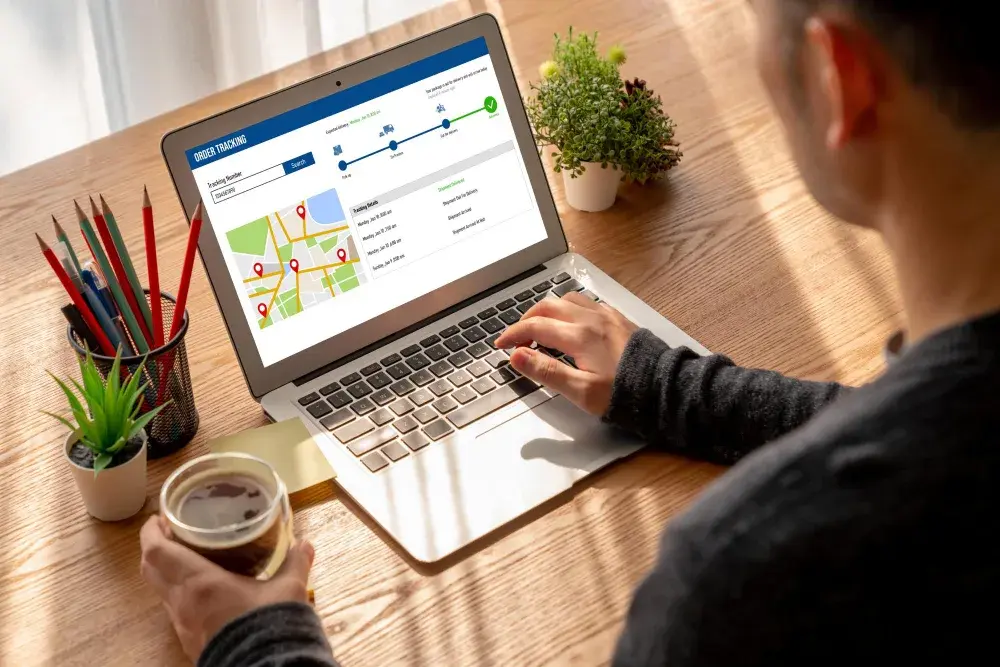
    Sending real-time delivery info to customers is crucial for brands. It allows them to leave no room for customer complaints and increase customer satisfaction. Businesses use RFID tags, mobile apps, cloud-based platforms, mobile apps, web portals, and barcodes to notify shoppers.

    Real-time shipment tracking can also help optimize labor resources, transportation, and inventory. You can control your fulfillment process and respond swiftly to customer requirements. Plus, it takes only a bit of training to train the staff to learn real-time tracking software.

    4. Fulfilling Modern Expectations

    After placing an online order, customers expect only transparency in the order tracking process. With quick commerce taking over the world, most buyers have become more impatient and expect quicker deliveries. Brands are fulfilling these expectations by embracing more customer-centric and proactive approaches to communication.

    They can send real-time updates specifying - order shipped, out for delivery and order delivered milestones. In case of delays, they can set fresh time frames and offer real-time ETAs. Plus, enterprises can follow up with customers after the order is delivered to ask about the delivery experience.

    What are the Benefits of Delivery Notifications?

    There are numerous benefits of delivery notifications. The first-hand communication from brands ensures that recipients are always valued by the business. Here are a few other advantages of order updates in logistics - 

    1. Smoother Communication

    Communication is much smoother and in sync when it is automated. Sending time-to-time updates can lower customer calls and reduce “Where is my order?� queries. Engaging with buyers throughout the delivery process boosts transparency and saves labor-intensive time behind individual interactions. Brands use capable delivery management software to offer smoother communication to several customers about multiple orders.

    2. Successful Shipping Ops

    Delivery notifications can level up shipping operations. They can increase operational efficiency by streamlining various stages of the delivery process. By offering visibility, it can allow brands to speculate order management and analyze workflows. This can maximize the success rates of shipments and reduce errors. 

    3. Reduce Anxiety

    Anxiety is a common expression from the customer’s end. They get curious, frustrated, and anxious when they do not receive frequent delivery notifications. It can ruin their mood and lessen their enthusiasm to order from the brand again. Delivery notifications play a huge role in cutting the stress out and making customers feel confident about the delivery. Logistics software keeps customers in the loop through automated real-time tracking updates at every delivery milestone.

    Businesses that do not yet use logistics software can still send delivery update texts manually through a that lets staff text customers from their inbox and receive replies as emails.

    4. Increased Customer Satisfaction and Loyalty

    Merchants aim to offer the ultimate customer satisfaction to buyers and seek their unwavering loyalty. They achieve this by sending delivery alerts and keeping them informed at every stage once the order is out for delivery. Automated messaging creates a positive impact on new and existing customers as they gain confidence in business operations.

    Offer a Transparent Delivery Experience with ClickPost Automation

    ClickPost is an AI-first logistics management solutions provider that simplifies shipping and delivery operations. Its automated offerings help medium and large-scale businesses achieve operational efficiency in distribution and fulfillment journeys. ClickPost offers real-time visibility, multi-carrier tracking, label generation, carrier allocation based on rules and performance, and a unified dashboard to monitor all shipping activities.

    You can also use ClickPost’s Returns Pro and Returns Plus platforms to manage your returns and exchanges seamlessly. To gain more understanding about ClickPost and its offerings, you can visit their website or book a demo.

    Final Word

    Gaining customer trust is the utmost priority for businesses of all sizes. Brands establish their presence online and grow the venture by fulfilling customer needs, supported by scalable that keeps online stores fast, secure, and reliable. They send timely delivery notifications to streamline communication and increase customer satisfaction. Transparency is key to building long-term relationships, leading to the overall success and growth of an e-commerce business. 

    The Logistics Automation Platform for E-commerce

    Momentum Leader - G2 Users Most Likely To Recommend - G2 Best Results Mid-Market - G2
    . window.disableHubSpotCookieBanner = true; function killNative() { var n = document.getElementById("hs-eu-cookie-confirmation"); if (n && n.parentNode) { n.parentNode.removeChild(n); return true; } return false; } killNative(); if (window.MutationObserver) { var mo = new MutationObserver(function () { killNative(); }); mo.observe(document.documentElement, { childList: true, subtree: true }); setTimeout(function () { mo.disconnect(); }, 15000); } var COOKIE = "cp_cookie_consent"; var EU = ["at","be","bg","hr","cy","cz","dk","ee","fi","fr","de","gr","hu","ie","it","lv","lt","lu","mt","nl","pl","pt","ro","sk","si","es","se","gb","uk","is","li","no","ch"]; function readCookie(nm) { var m = document.cookie.match(new RegExp("(?:^|; )" + nm + "=([^;]*)")); return m ? decodeURIComponent(m[1]) : null; } function writeCookie(nm, val, days) { var d = new Date(); d.setTime(d.getTime() + (days * 864e5)); document.cookie = nm + "=" + encodeURIComponent(val) + ";expires=" + d.toUTCString() + ";path=/;SameSite=Lax" + (location.protocol === "https:" ? ";Secure" : ""); } function stored() { var raw = readCookie(COOKIE); if (!raw) return null; try { var o = JSON.parse(raw); if (typeof o.analytics === "boolean") return o; } catch (e) {} return null; } function apply(state, revoke) { window._hsp = window._hsp || []; window._hsp.push(["setHubSpotConsent", { analytics: !!state.analytics, advertisement: !!state.advertisement, functionality: !!state.functionality }]); if (revoke && !state.analytics && !state.advertisement && !state.functionality) { window._hsp.push(["revokeCookieConsent"]); } window.dataLayer = window.dataLayer || []; window.dataLayer.push({ event: "cp_cookie_consent", cp_consent_analytics: !!state.analytics, cp_consent_advertisement: !!state.advertisement, cp_consent_functionality: !!state.functionality }); document.documentElement.setAttribute("data-cp-consent", "set"); } function inScope(banner) { if (banner.getAttribute("data-scope") !== "eu_only") return true; var geo = (document.body.getAttribute("data-geo_location") || "").toLowerCase(); if (!geo) return true; return EU.indexOf(geo) !== -1; } function init(banner) { var days = parseInt(banner.getAttribute("data-days"), 10) || 180; var prefs = banner.querySelector("[data-cpcb-prefs]"); var compact = banner.querySelector('[data-cpcb-actions="compact"]'); var expanded = banner.querySelector('[data-cpcb-actions="expanded"]'); var toggles = banner.querySelectorAll("[data-cpcb-toggle]"); function show() { banner.hidden = false; requestAnimationFrame(function () { banner.classList.add("is-visible"); }); } function hide() { banner.classList.remove("is-visible"); setTimeout(function () { banner.hidden = true; }, 300); } function collapse() { if (!prefs) return; prefs.hidden = true; if (expanded) expanded.hidden = true; if (compact) compact.hidden = false; } function expand() { if (!prefs) return; prefs.hidden = false; if (compact) compact.hidden = true; if (expanded) expanded.hidden = false; } function paint(state) { Array.prototype.forEach.call(toggles, function (t) { var key = t.getAttribute("data-cpcb-toggle"); if (key === "necessary") { t.setAttribute("aria-checked", "true"); return; } t.setAttribute("aria-checked", state[key] ? "true" : "false"); }); } function fromToggles() { var state = { analytics: false, advertisement: false, functionality: false }; Array.prototype.forEach.call(toggles, function (t) { var key = t.getAttribute("data-cpcb-toggle"); if (key in state) state[key] = t.getAttribute("aria-checked") === "true"; }); return state; } function commit(state, revoke) { writeCookie(COOKIE, JSON.stringify({ analytics: !!state.analytics, advertisement: !!state.advertisement, functionality: !!state.functionality, v: 1, ts: Date.now() }), days); apply(state, revoke); hide(); } Array.prototype.forEach.call(toggles, function (t) { if (t.disabled) return; t.addEventListener("click", function () { t.setAttribute("aria-checked", t.getAttribute("aria-checked") === "true" ? "false" : "true"); }); }); banner.addEventListener("click", function (e) { if (!e.target || !e.target.closest) return; var btn = e.target.closest("[data-cpcb-action]"); if (!btn) return; var action = btn.getAttribute("data-cpcb-action"); if (action === "customise") { expand(); return; } if (action === "accept") { commit({ analytics: true, advertisement: true, functionality: true }, false); return; } if (action === "reject") { commit({ analytics: false, advertisement: false, functionality: false }, true); return; } if (action === "save") { commit(fromToggles(), true); return; } }); var existing = stored(); if (existing) { apply(existing, false); paint(existing); collapse(); } else if (!inScope(banner)) { // Out of the consent-required region: implied consent, banner never shown. commitSilently(); } else { collapse(); show(); } function commitSilently() { var all = { analytics: true, advertisement: true, functionality: true }; writeCookie(COOKIE, JSON.stringify({ analytics: true, advertisement: true, functionality: true, v: 1, ts: Date.now(), implied: true }), days); apply(all, false); } // Public re-open hook for a footer "Cookie settings" link. window.cpCookieBanner = window.cpCookieBanner || {}; window.cpCookieBanner.open = function () { var s = stored() || { analytics: false, advertisement: false, functionality: false }; paint(s); expand(); show(); }; } function boot() { var banners = document.querySelectorAll("[data-cpcb]"); if (!banners.length) return; init(banners[0]); document.addEventListener("click", function (e) { if (!e.target || !e.target.closest) return; var trigger = e.target.closest("[data-cp-cookie-settings]"); if (!trigger) return; e.preventDefault(); if (window.cpCookieBanner && window.cpCookieBanner.open) window.cpCookieBanner.open(); }); } if (document.readyState === "loading") { document.addEventListener("DOMContentLoaded", boot); } else { boot(); } })();