.png?width=193&height=27&name=ClickPost%20Logo%20(Blue).png)
.svg)
.svg)
.svg)
.svg)
.svg)
.svg)
.svg)
.svg)
.svg)


.svg)

.svg)
.svg)
.svg)
.svg)
.svg)


.svg)
.svg)
.webp?width=286&height=206&name=ROI%20Calculator%20(1).webp)
.svg)
.svg)
.webp?width=286&height=206&name=RTO%20Playbook%20(1).webp)
Top 13 Quick Commerce Companies in India [2026]


Ready to ship smarter? Talk to our logistics experts.
Trusted by 600+ brands
In this blog
TL;DR – The 10 Best Quick Commerce Companies in India in 2026
Blinkit leads with 50% market share and 10-minute delivery, but rivals win on niche categories, deeper city reach, and SKU diversity.
-
Blinkit – Best for speed and market-leading grocery delivery
-
Swiggy Instamart – Best for high SKU variety and gifting needs
-
Zepto – Best for AI-powered ultra-fast fresh food delivery
-
Flipkart Minutes – Best for electronics and heavy discount shoppers
-
Amazon Fresh – Best for Tier-2/3 cities and reliable quality checks
-
BigBasket (BB Now) – Best for widest SKU range and organic groceries
-
M-Now (Myntra Now) – Best for instant fashion and last-minute apparel
-
JioMart Express – Best for multi-city reach via Reliance store network
-
FreshToHome Express – Best for preservative-free meat and seafood deliver.
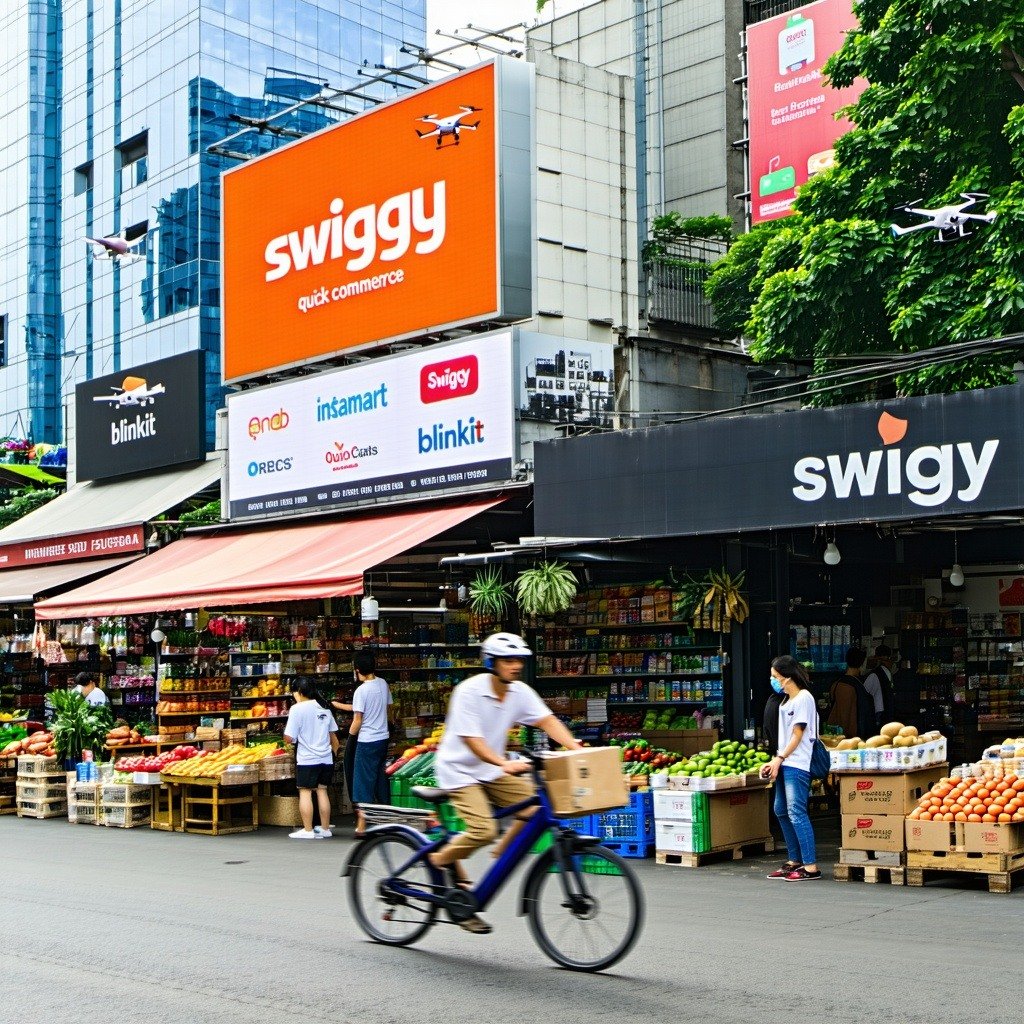
The quick commerce market in India is transforming the way modern consumers shop for essentials, groceries, and household items. With a rising demand for ultra-fast delivery, businesses are competing fiercely to ensure rapid delivery within minutes. From Swiggy Instamart and Blinkit to Zepto and Flipkart Minutes, quick commerce companies are reshaping consumer expectations by providing instant access to products at the fastest possible speeds.
Unlike traditional e-commerce logistics, where deliveries typically take a day or more, quick commerce platforms prioritize delivery time. They are ensuring that customers receive their orders in as little as 10–30 minutes. This rapid growth has been fueled by dark stores strategically located in major cities. It allows companies to operate with maximum efficiency while keeping operational logistics costs low.
Key aspects of quick commerce:
-
Speed-focused operations: Orders are processed, packed, and dispatched within minutes.
-
AI-driven route optimization: Helps drivers navigate efficiently and reduce delivery routes.
-
Product curation: Unlike traditional e-commerce, quick commerce caters to urgent, high-frequency purchases.
-
Strategic use of dark stores: Warehouses are placed close to high-density consumer zones to facilitate rapid delivery.
By leveraging advanced technology, quick commerce companies improve customer satisfaction, reduce order processing times, and provide a seamless shopping experience. The hyperlocal delivery business model that underpins q-commerce is what separates it fundamentally from traditional retail and standard online shopping.
Key Stats and Insights Into India's Quick Commerce Sector in 2026
-
India's quick commerce sector is valued at and is projected to grow to USD 6.64 billion by 2031, expanding at a compound annual growth rate of 12.74%.
-
With over 50% market share, Blinkit has firmly established itself as the dominant force in India's quick commerce industry, according to data from BofA Securities.
-
Quick commerce in India's grocery sector is growing fast, powered by for instant delivery and a post-pandemic embrace of digital platforms.
-
India's quick commerce channel is projected to surge from , within a packaged F&B market expected to reach $150 billion.
-
Blinkit hit Adjusted — a sharp turnaround from a ₹156 Cr loss just one quarter earlier.
-
Quick commerce is expanding well beyond grocery, with non-grocery categories like fashion, mobiles, and beauty growing and driving the sector's next phase of growth.
Why Is India's Quick Commerce Sector Booming Right Now?
-
Rising consumer preferences for instant access to groceries and household essentials.
-
The expansion of dark stores in high-density areas ensures fast delivery.
-
Advanced logistics automation systems and AI-powered route optimization improve delivery efficiency.
-
Strategic partnerships with local grocery stores and retailers help expand product availability.
As many quick commerce platforms battle to dominate the market, this article explores how quick commerce companies in India operate, their unique features, and how logistics remains the silent hero of their success.
How We Compared These Quick Commerce Platforms
This comparison evaluates q-commerce platforms in India based on promised delivery speed, product range, city coverage, dark store density, AI and technology adoption, and unique operational differentiators. All details reflect publicly available data as of early 2026, and delivery times are platform-stated averages that may vary by location and order volume.
Top 13 Quick Commerce Companies in India in 2026: Compared by Speed, Range & USP
As consumer behavior continues shifting towards instant access to products, quick commerce companies in India are investing in technology-driven last-mile delivery software to enhance delivery speed and customer satisfaction. Below are the top quick commerce companies operating in India, leading the charge in ultra-fast delivery.
| Company Name | Delivery Time | Product Range | Cities Covered | Dark Store Strategy |
Unique Selling Point (USP)
|
| Blinkit | 10–12 mins | Groceries, Electronics, Home, Beauty | 35+ Metros & Tier-1 | 2,200+ dense dark store network; 3,000 targeted by 2027. |
Market leader (50% share); Zomato ecosystem integration.
|
| Swiggy Instamart | 10–15 mins | Fresh, Staples, Electronics, Gifting | 130+ Cities | 1,130+ stores; scaling average size to 4.8M sq ft total. |
High SKU diversity (45k+); best-in-class AOV (~₹746).
|
| Zepto | 10 mins | Groceries, Household, Zepto Cafe | Major Metros (focus on density) | 500+ owned dark stores in high-density zones. |
AI-powered fulfillment; hyper-focus on speed and fresh food.
|
| Flipkart Minutes | 10–15 mins | Groceries, Electronics, Fashion | Bengaluru, Mumbai, Delhi + Tier-2 | 800+ stores; aiming to double (1,600) by end of 2026. |
Heavy discount leverage; massive electronics inventory.
|
| Amazon Fresh | 2-hour (Standard) | Groceries, Monthly Pantry | 300+ Cities | Centralized warehouses + ~450 local hubs. |
Reliable quality checks (4-step); deep penetration in Tier-2/3.
|
| BigBasket (BB Now) | 15–30 mins | Groceries, Organic, Kitchenware | Major Metros | IBBN Stores (Large format, 20k sq ft) for dual fulfillment. |
Integration with Tata Neu; massive 50k SKU range.
|
| M-Now (Myntra Now) | 30–60 mins | Fashion, Apparel, Accessories | Bengaluru, Delhi, Mumbai | Specialized fashion-focused micro-warehouses. |
Instant fashion "glam-up" for parties and emergencies.
|
| JioMart Express | 15–30 mins | Groceries, Personal Care | 200+ Cities | Uses Reliance Fresh/Smart stores as hyperlocal hubs. |
Massive supply chain leverage; multi-channel physical presence.
|
| FreshToHome Express | 20–40 mins | Meat, Seafood, Preservative-free | 15+ Cities | Integrated cold-chain micro-warehouses. |
Farm-to-fork; specialized chemical-free fresh protein.
|
1. Flipkart Minutes: How Does Flipkart's 10-Minute Grocery and Electronics Delivery Work in 2026?
Flipkart Minutes was launched in July 2024, making Flipkart's entry into the quick commerce sector one of the most anticipated moves in India's e-commerce market. The service promises 10-minute deliveries, leveraging Flipkart's existing supply chain and infrastructure to fulfill orders efficiently.
The platform offers a diverse product catalog, including groceries, household essentials, personal care items, and electronics. Unlike other quick commerce companies, Flipkart Minutes introduces a unique cancellation policy, allowing customers to refuse the order if the experience does not meet expectations.
The service initially rolled out in Bengaluru, Delhi NCR, and Mumbai, with plans to expand further. Efficient inventory management and strategic dark store placement are central to making this 10-minute promise a reality.
2. Amazon Fresh India: Delivery Time, Cities Covered, and 4-Step Quality Standards
Amazon Fresh is Amazon's grocery delivery market arm, designed to offer ultra-fast delivery of essentials. While Amazon Fresh initially launched in 2019, the company has been strengthening its quick commerce offerings to match the pace of leading online grocery stores like Blinkit and Zepto.
With a focus on quality, Amazon Fresh operates on a 2-hour delivery model in over 300 cities, including tier-2 and tier-3 locations. However, in 2026, Amazon is increasingly pushing sub-30-minute delivery slots in metro cities—a strategic move to close the speed gap with Blinkit, Zepto, and Flipkart Minutes.
It ensures freshness through a four-step quality check process and regularly offers discounts via its Super Value Days promotions. Amazon Fresh's broad reach across India makes it a compelling choice for consumers who prioritize quality alongside speed.
3. Blinkit Bistro: What Is It and How Fast Does It Deliver Ready-to-Eat Food in Under 15 Minutes?
Owned by Zomato, Blinkit Bistro is a newly launched quick commerce platform focusing on fast delivery of ready-to-eat meals, beverages, and snacks. The service was introduced in December 2024, catering to select locations in Gurugram.
With a delivery speed of under 15 minutes, Blinkit Bistro competes directly with Zepto Café, capitalizing on the demand for quick food and beverage deliveries. The platform aims to become a prominent food delivery service by expanding into multiple metro cities in 2026.
4. Zepto: How Does India's AI-Powered 10-Minute Grocery Delivery App Operate in 2026?
Zepto has emerged as one of India's leading quick commerce companies, specializing in 10-minute deliveries. The company operates over 500 dark stores across major cities, including Mumbai, Bengaluru, Delhi, Chennai, Hyderabad, and Pune.
Zepto's unique selling point lies in its precision logistics model, leveraging AI-powered tracking and real-time inventory management to minimize delivery routes and maximize order efficiency.
The platform continues to expand aggressively, with its valuation soaring past $1 billion. Its use of AI and machine learning in carrier allocation is a key reason for its industry-leading fulfillment speed.
5. Zomato Quick Commerce: How Is Zomato Expanding Beyond Food Delivery into Groceries in 2026?
Launched initially as a food delivery platform, Zomato has diversified into quick commerce through its grocery and essentials segment. The company leverages its massive network of delivery partners to ensure that customers receive their orders in under 20 minutes.
Zomato is expanding its presence in quick commerce, with plans to introduce strategic partnerships in the grocery delivery market, further strengthening its ultra-fast delivery services. They intend to deliver groceries and other essentials even quicker, benefiting from the same hyperlocal delivery infrastructure that powers its restaurant delivery network.
6. Swiggy Instamart: Delivery Speed, Product Range, and City Coverage Explained for 2026
As one of the fastest-growing quick commerce platforms, Swiggy Instamart has revolutionized the way customers shop for essentials. Offering a wide product range, including fresh produce, dairy, and household items, the platform guarantees deliveries within 10–30 minutes.
Swiggy Instamart operates on a dark store model, enabling it to reduce fulfillment times while maintaining high stock availability. The service is currently active in more than 25 cities and is expanding further. Its ability to leverage Swiggy's existing last-mile delivery network gives it a distinct competitive edge over newer entrants.
7. BigBasket BB Now: How Does India's Leading Online Grocery Store Achieve 15-Minute Delivery?
BigBasket, a leading online grocery provider, has expanded into quick commerce with its BB Now service. This venture aims to compete with established players like Swiggy Instamart and Blinkit by providing instant access to fresh groceries and household essentials.
BB Now focuses on a 15–30 minute delivery model, supported by dark stores located across multiple metro cities. It offers an extensive product selection, including vegetables, dairy, personal care items, and packaged foods. Unlike its competitors, BB Now integrates with BigBasket's main e-commerce ecosystem. That enables customers to switch between scheduled and rapid orders seamlessly.
BigBasket's unique edge lies in its subscription service, BB Star, which provides discounts and priority delivery for frequent shoppers. Additionally, the company leverages AI-powered inventory management systems to ensure product availability. It reduces instances of order cancellations and out-of-stock items.
8. Dunzo Daily: How Does Its Partnership-Driven Hyperlocal Delivery Model Work for Essentials?
Dunzo Daily, an offshoot of Dunzo, is a hyperlocal quick commerce solution focusing on daily essentials. Initially recognized for its on-demand courier and delivery services, Dunzo pivoted towards groceries and household products to capitalize on the rapid commerce wave.
Operating in Bangalore, Delhi NCR, Chennai, Pune, and Mumbai, Dunzo Daily follows a dark store model. It helps the company ensure short delivery times of 15–20 minutes. It specializes in fresh groceries, dairy, packaged foods, and beverages. That makes it a strong contender in the instant delivery segment.
One of Dunzo Daily's key differentiators is its partnership-driven model. Instead of owning warehouses, the company collaborates with local retailers and established brands.
That helps the company optimize its supply chain while maintaining competitive pricing. This strategic partnership approach allows Dunzo Daily to operate with lower logistics costs while maintaining a high availability of products.
9. Myntra M-Now: How Does Quick Fashion Delivery Work with Same-Day and 2-Hour Delivery Options?
Myntra, a leading fashion e-commerce company, launched M-Now to revolutionize fashion quick commerce. Unlike other companies focusing on groceries and household essentials, M-Now offers clothing, accessories, and beauty products with same-day or 2-hour delivery options in select locations.
The USP of M-Now lies in its AI-powered recommendation system, which ensures that customers receive personalized fashion selections instantly. With strategic partnerships with brands like H&M and Nike, Myntra Now brings premium brands into the instant delivery space.
By leveraging dark stores, M-Now reduces fulfillment times and increases customer loyalty. The platform is expanding into tier-2 cities. The company aims to make quick fashion the next big trend in India's e-commerce sector. Its approach to multi-carrier shipping for fashion stores plays a key role in keeping delivery promises consistent across locations.
10. FreshToHome Express: Why Is It India's Top Choice for Same-Day Fresh Meat and Seafood Delivery?
FreshToHome Express is a specialized quick commerce service catering to fresh meat, seafood, and organic groceries. As one of the only brands focusing on farm-to-fork logistics, it guarantees same-day delivery while maintaining strict quality control standards.
Operating in Bangalore, Mumbai, Chennai, and Hyderabad, FreshToHome Express sources products directly from farmers and fisheries. It eliminates middlemen and reduces logistics delays. Unlike its competitors, FreshToHome focuses solely on fresh perishables. The company ensures that customers receive high-quality meat and produce.
The company's sustainability-focused approach includes eco-friendly practices, such as using electric vehicles for deliveries and biodegradable packaging. With an emphasis on traceability, FreshToHome ensures transparency in sourcing. That makes it a preferred choice among health-conscious consumers.
11. JioMart Express: How Does Reliance's Vast Supply Chain Power 10-to-20-Minute Grocery Delivery?
Backed by Reliance Retail, JioMart Express is making significant inroads into the quick commerce sector. It offers ultra-fast grocery and essentials delivery, leveraging Reliance's vast distribution network.
JioMart Express operates on a dark store model, ensuring efficient inventory management. Its primary advantage lies in its ability to integrate with physical Reliance Fresh stores. That allows it to scale rapidly without major infrastructure investments.
With a focus on tier-2 and tier-3 cities, JioMart Express provides a wide product selection. These products include groceries, electronics, and personal care items. It also benefits from Reliance's extensive supply chain operations, which ensures cost-effective pricing and frequent discounts.
12. Ola Food and Grocery Delivery: How Does a Ride-Hailing Giant Compete in India's Quick Commerce Market?
Ola, originally a ride-hailing giant, has ventured into quick commerce through its food and grocery delivery services. Dark stores power this rapid delivery model. It fulfills high-demand orders within 20–30 minutes.
Currently operational in select metro cities, Ola's model integrates with its existing ride-hailing infrastructure. That allows drivers to fulfill grocery orders in their downtime. The company is also experimenting with cloud kitchens. It positions itself as a competitor to Zomato and Swiggy Instamart.
Ola's unique approach blends food, grocery, and essentials delivery under one subscription-based ecosystem. It allows users to combine multiple orders for cost savings, making it one of the more innovative order fulfillment services to emerge from India's ride-sharing sector.
13. Slikk: How Is This New Quick Commerce Startup Using Automation, AI, and Predictive Fulfillment?
Slikk is a new entrant in India's quick commerce space. It focuses on tech-driven ultra-fast delivery. Unlike other companies, Slikk aims to build a fully automated warehouse network. Hence, it ensures real-time inventory tracking and AI-powered fulfillment centers.
Slikk emphasizes high-value consumer goods, such as electronics, health products, and premium groceries. Hence, it differentiates itself by offering curated product selections. The brand is set to expand aggressively in 2026, targeting high-density locations.
By leveraging logistics automation and predictive demand forecasting, Slikk is positioning itself as a future-ready quick commerce brand with minimal human intervention.
Quick Commerce vs Traditional E-Commerce: What Is the Key Difference for Indian Shoppers?
The core difference between quick commerce and traditional e-commerce lies in fulfillment design. Quick commerce platforms position inventory in hyperlocal dark stores close to demand clusters, optimizing for delivery within 10 to 30 minutes. Traditional e-commerce relies on centralized warehouses with delivery windows of one to several days. Q-commerce focuses on high-frequency, urgent purchases like groceries and essentials, while traditional e-commerce is better suited for planned, high-value orders. This distinction in dark store logistics India and last-mile infrastructure is what makes the fastest delivery apps in India fundamentally different from standard online retail.
What Is the Future of Quick Commerce in India? Key Trends for 2026 and Beyond
The future of quick commerce in India is poised for transformative growth. With customer expectations evolving, digital penetration increasing, and cities expected to contribute , this sector will leverage advanced technologies and refined operational models to meet escalating demand.
In the coming years, improvements in automation, platform integration, cost management, security measures, and customer experience will reshape the way products are delivered in record time. Let's explore the key trends that will drive this evolution.
1. How Will Automation and AI Technology Transform Quick Commerce Operations in India?
"Technology will be central to the next leap in quick commerce operations. Given that deliveries under 10 minutes already accounted for 62.24% of India's quick commerce market in 2025, and is expected to grow at 15.39% CAGR through 2031, speed is no longer a differentiator — it's the baseline.
AI-powered systems and real-time analytics will drive smarter order processing, inventory management, and demand forecasting. These advancements will help companies respond swiftly to order surges and shifting demand patterns, keeping fulfillment times razor-sharp."
As technology advances, businesses can expect smarter routing algorithms, enhanced warehouse automation, and improved decision-making processes that collectively boost delivery speed and overall operational efficiency. By integrating AI workflows, businesses can better connect automation tools and optimize every stage of quick commerce. Platforms exploring supply chain automation are finding that it dramatically reduces manual errors and speeds up the entire fulfillment cycle.
2. Why Will Carrier and Platform Integrations Define the Next Phase of Quick Commerce Growth?
Seamless integrations between multiple logistics partners and e-commerce platforms are set to become the backbone of future quick commerce. Consolidating carrier networks through robust APIs and centralized management systems will allow for real-time data exchange. It will ensure that the right logistics partner is selected for each order.
These integrations will simplify complex workflows and eliminate fragmentation. In turn, this will empower companies to consistently achieve prompt deliveries while effectively managing capacity and performance across their entire network. The adoption of multi-carrier shipping software is already helping leading platforms build resilient, scalable delivery ecosystems.
3. How Can Quick Commerce Companies Achieve Cost-Effectiveness in Shipping Without Sacrificing Speed?
Future quick commerce models will focus on cost optimization without sacrificing service quality. Innovative pricing engines and dynamic rate comparison tools will enable businesses to secure the most cost-effective shipping options consistently. This approach will allow companies to scale operations with lower marginal costs by reducing fuel expenses and labor-intensive manual processes.
In a competitive market, achieving cost-effectiveness will also drive better profit margins and foster long-term sustainability. It will position firms favorably against traditional retail models. Smarter carrier allocation strategies will be central to balancing speed and cost as platforms scale into new cities.
4. How Will Fraud Prevention and Security Shape the Future of Q-Commerce Transactions in India?
As the volume of rapid transactions rises, so does the potential for fraud. Advanced security systems will be integrated into quick commerce platforms to monitor and flag suspicious activity in real-time. These systems will employ machine learning to detect anomalies in order patterns and verify customer data.
Enhanced security protocols, combined with robust authentication measures, will ensure that only legitimate transactions are processed. It will safeguard both consumers and businesses from fraudulent activities and reduce the risk of financial losses. Platforms are increasingly turning to dedicated e-commerce fraud prevention software to protect high-frequency quick commerce transactions at scale.
5. How Will Customer Experience Innovation Drive Loyalty and Repeat Orders in Quick Commerce?
An unparalleled focus on customer experience will define the future of quick commerce. Companies will invest in personalized interfaces, proactive communication, and self-service portals to keep customers informed and engaged. Efforts to fine-tune delivery notifications and provide real-time status updates will create an environment of trust and reliability.
Ultimately, an improved post-purchase experience and streamlined returns processes will foster customer loyalty. It will encourage repeat purchases and elevate brand reputation across the market.
Streamline Your Quick Commerce Shipping Operations with ClickPost
ClickPost stands out as the premier solution for fast, efficient logistics in quick commerce. By automating repetitive tasks and seamlessly integrating with multiple carriers, ClickPost empowers businesses to manage order creation, dispatch, and delivery with minimal manual effort. Its robust infrastructure is designed to handle high order volumes and deliver real-time updates. ClickPost ensures that businesses can meet customer demands swiftly and accurately.
Key features include:
-
Automated order manifestations and instant shipping label generation.
-
A machine learning-driven carrier recommendation engine for optimal delivery performance.
-
Real-time order tracking with multi-channel notifications (via WhatsApp, SMS, and email).
-
Predictive delivery date estimates and smart serviceability data on product pages.
-
Automatic conversion of COD orders to prepaid during transit.
-
A self-service portal for returns management, exchanges, and refunds.
-
Comprehensive analytics and reporting to refine logistics decisions.
Experience a revolution in your shipping operations and discover how ClickPost can transform your delivery process and enhance customer retention. Schedule your demo today and see why over 350 brands trust ClickPost to optimize their logistics.
Conclusion: How Quick Commerce Is Redefining Retail and Last-Mile Delivery in India
As the quick commerce market continues to evolve at a breakneck pace, companies in India are redefining the way consumers shop for daily essentials. With advanced digital solutions and hyperlocal fulfillment strategies, businesses are exceeding consumer expectations for near-instant deliveries. This rapid transformation is paving the way for an era where efficiency, technology, and strategic logistics integration drive both profitability and customer loyalty. The dynamic environment compels players to innovate continuously.
Looking forward, the sector is set to benefit from further technological integration and expanded delivery networks that extend beyond major urban centers. As quick commerce evolves, businesses that invest in innovative, agile systems will enjoy a competitive advantage.
Embracing this shift is critical for retailers seeking to thrive in an increasingly digital marketplace, where rapid response and superior customer experiences are paramount. The future promises improved operational performance and a more sustainable and resilient e-commerce supply chain management framework.
Frequently Asked Questions About Quick Commerce in India (2026)
How large is India's quick commerce market compared to other e-commerce segments in 2026?
India's quick commerce market is valued at USD 3.65 billion in 2026 and is projected to reach USD 6.64 billion by 2031, growing at a compound annual growth rate of 12.74%, according to Mordor Intelligence. This makes it one of the fastest-growing segments within India's broader e-commerce landscape.
Which quick commerce platform leads in market share in India: Blinkit, Zepto, or Swiggy Instamart?
Blinkit leads with over 50% market share in India's quick commerce sector, according to BofA Securities. It operates 2,200+ dark stores across 35+ metros and tier-1 cities. Swiggy Instamart follows with presence in 130+ cities, while Zepto focuses on AI-powered fulfillment across major metros.
Which is faster for grocery delivery in India: quick commerce or traditional e-commerce?
Quick commerce is significantly faster. Deliveries under 10 minutes accounted for 62.24% of India's quick commerce market in 2025, according to Mordor Intelligence. Platforms like Blinkit, Zepto, and Flipkart Minutes deliver in 10–15 minutes, compared to one-day or longer timelines for traditional e-commerce.
Which non-grocery categories are growing faster than grocery on Indian quick commerce platforms?
Non-grocery categories are growing 1.6x faster than grocery. Fashion (+340%), mobiles (+245%), beauty and personal care (+140%), and electronics are the fastest-expanding segments — indicating that quick commerce is no longer a grocery-only channel.
How does India's quick commerce user base in 2026 compare to projected 2030 numbers?
The user base is expected to reach 33 million in early 2026 and nearly double to 65 million by 2030. The 25–34 age group is the most active demographic, driven by working professionals who prioritize speed and convenience.
Which was the first major quick commerce platform in India to achieve EBITDA profitability?
Blinkit became one of the first to hit Adjusted EBITDA breakeven in Q3 FY26 (December 2025), posting a profit of ₹4 Cr — a sharp reversal from a ₹156 Cr loss just one quarter earlier in Q2 FY26.
What makes quick commerce fundamentally different from traditional e-commerce in India?
Quick commerce uses hyperlocal dark stores to deliver orders within 10–30 minutes, targeting high-frequency essentials like groceries and household items. Traditional e-commerce relies on centralized warehouses with delivery windows of one to several days, better suited for planned, higher-value purchases.
How large is India's quick commerce GMV expected to be by 2030 compared to 2026?
India's quick commerce channel is projected to grow from $4 billion to over $25 billion in GMV by 2030, within a packaged F&B market expected to reach $150 billion. Bernstein projects 80% industry growth driven by dark store expansion and deeper discounting.
How do dark stores in India compare to traditional warehouses for quick commerce delivery?
Dark stores are hyperlocal micro-warehouses placed in high-density urban zones, enabling 10–30 minute deliveries — unlike traditional centralized warehouses that serve wider areas with longer timelines. Blinkit operates 2,200+ dark stores, Flipkart Minutes has 800+ with plans to double by end of 2026, and Zepto runs 500+ owned facilities. Learn more about how dark stores work and why they are central to India's quick commerce infrastructure.
The Logistics Automation Platform for E-commerce


We use cookies to keep the site working, understand usage, and improve your experience. Learn more
Always active for essential site performance and security.
Enables anonymous usage analysis to refine our services.
Used to present relevant promotions and advertising.